

GPS Is Not Guaranteed: What happens when Global Navigation Satellite Systems (GNSS) fails In the world’s busiest ports.
Date and Time: Thursday, May 21st 4:00 PM – 5:00 PM EDT
Platform: Zoom
On 26th March 2024, the collapse of the Francis Scott Key Bridge brought global attention to a risk the maritime industry has long understood, but rarely managed to communicate successfully: when large ships interact with critical infrastructure, small failures can have disproportionate consequences.
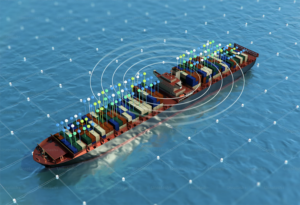
Today’s vessels are larger, channels are tighter, and port operations are more dependent than ever on high-precision positioning. Much of that precision is enabled by GNSS. In an increasing number of modern pilotage environments, it is not just a tool, it is the system that makes the operation possible.
At the same time, a generation of “GNSS-native” mariners has emerged: highly capable with digital navigation systems, but increasingly removed from the independent skills that once underpinned resilience. This creates a subtle but important shift away from using GNSS as an aid, to depending on it.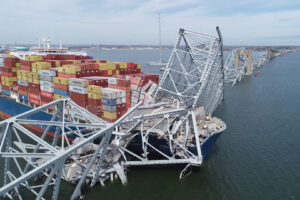
This webinar explores what that shift means in practice.
Drawing on frontline experience in pilotage and port operations, it examines the way GNSS disruption, whether through jamming, spoofing, interference, or system faults, interacts with human decision-making, automation bias, and constrained operating environments. In locations where pilots cannot physically see the channel or infrastructure they are navigating around, digital positioning becomes the primary source of truth.
The result is a risk profile that is no longer hypothetical, but operational.
Using real-world scenarios, including bridge transits in constrained waterways, this session reframes GNSS vulnerability not as a technical issue, but as a system-level risk spanning safety, infrastructure resilience, trade continuity, and public impact.
The discussion then turns to what can be done.
Rather than focusing on any single solution, the session outlines a layered approach to resilient navigation:
- Multiple, independent positioning sources that fail differently
- Integrity awareness in terms of knowing when systems are wrong
- Retention and reintegration of human capability
- Localised and terrestrial alternatives to satellite positioning
- Governance and accountability for navigation resilience
The question is no longer whether GNSS disruption will occur in port environments.
It is whether the systems, people, and infrastructure that depend on it are prepared when it does.
Speakers
Host – Sareth Neak
 Sareth Neak is the President and Founder of Neak Media LLC, formerly known as Homeland Security Outlook. With a strong track record in government contracting and business development, Neak Media is widely recognized as the producer of the Maritime Security East and West Programs—flagship events that serve the maritime law enforcement and port security community.
Since 2009, Sareth has developed and facilitated more than 40 conferences focused on maritime security, emergency management, and counterterrorism across the United States and the Caribbean. Through this work, he has built strong collaborations with federal, state, and local agencies, including law enforcement, port authorities, and components of the Department of Defense.
Presenter – Captain Matt Shirley
 Captain Matt Shirley is a Master Mariner, former marine pilot, and co-founder of Safe Harbours Australia, a specialist maritime consultancy focused on pilotage, port operations, human performance, and operational resilience.
With more than 30 years of maritime experience, including over 20 years in marine pilotage across multiple ports in Australia, Matt has worked extensively in high consequence navigation environments where precise positioning and decision making are critical.
His current work focuses on helping ports, pilotage organisations, and maritime operators better understand operational risk, human factors, and the growing dependence on GNSS enabled systems. Through Safe Harbours Australia, he works with industry, insurers, legal teams, and government stakeholders to improve resilience in complex maritime operations.
Matt is also involved in broader discussions surrounding resilient Positioning, Navigation and Timing (PNT), including the operational impacts of GNSS disruption, spoofing, jamming, and space weather on maritime and critical infrastructure systems.
Register Now |